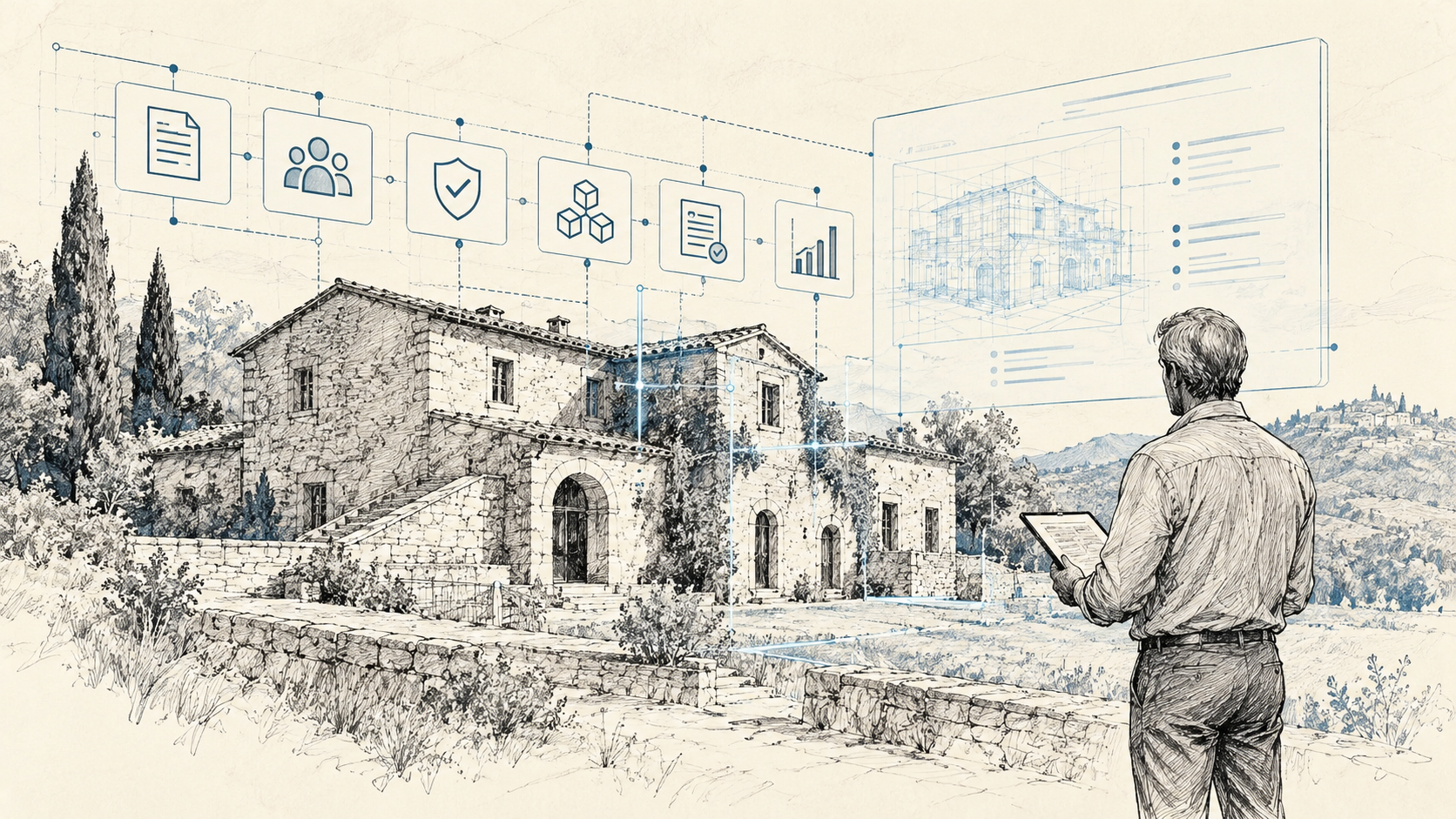
Explore the six layers of an RWA tokenisation platform, from investor onboarding and escrow to transfer controls, ownership records and lifecycle operations.
Over the past two years, tokenised private equity and structured debt have repeatedly been presented as the next asset class ready to move onto blockchain, after real estate.
The promise was always the same: fractional access, greater efficiency, the potential to develop secondary...
A practical walkthrough of ABTK, from wallet connection and identity verification to subscription, token receipt and access to ArBit Technology services.
Valuation, legal classification, asset-specific constraints and economic structure must be resolved before smart contracts can provide meaningful tokenization infrastructure.
Real estate tokenisation can improve access and transferability, but valuation, legal structure, asset constraints and governance must be resolved before the technology can deliver value.
ArBit Technology launched the ABTK public offering on 1 September 2026, connecting its MiCAR utility token to a broader infrastructure for digital asset markets.
Tokenized assets are moving from experimentation toward institutional infrastructure as regulated markets, traditional finance and blockchain technology increasingly converge.
Tokenization becomes complex where blockchain infrastructure meets legal ownership, settlement, identity and the operational requirements of regulated financial markets.
Understanding whether a token falls under MiCAR or qualifies as a MiFID II financial instrument is one of the first decisions in regulated tokenization.